
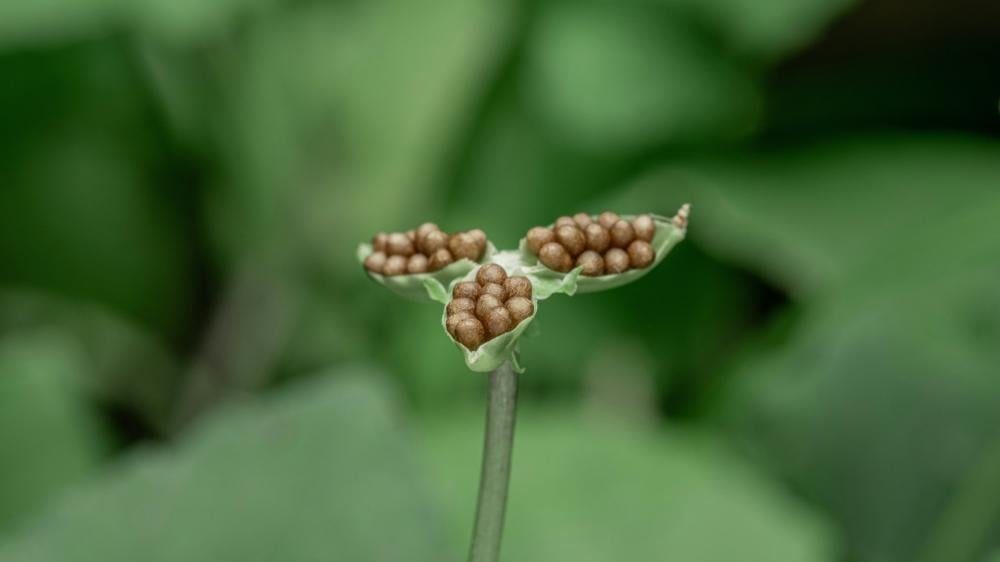
Al Talib Store stands out as a key destination for both amateur and professional farmers. With the diversity of agricultural needs and varying climatic conditions, choosing the right source of seeds has become a critical decision that determines the success or failure of an agricultural project. This guide outlines the criteria for selecting the best seed retailer, the types of seeds available, and how to choose the right seeds for your project based on your specific circumstances.
How to choose the best website to buy seeds?
Before deciding where to buy seeds, here are the basic criteria when choosing the best seed selling site:
- The trusted source offers genuine seeds, whether imported or local, carefully selected and subjected to quality tests that ensure a high germination rate and outstanding performance in the soil.
- A good website for selling seeds provides accurate and transparent information about each product, such as germination rate, production date, and varieties adapted to your region.
- Direct interaction with customers provides a personal experience, answering inquiries about farming problems and providing valuable advice, to create a community of amateur farmers around a trusted source.
Al-Talib's website prioritizes non-hybrid (open-pollinated) seeds, which often preserve their genetic makeup across generations. It allows users to collect seeds from their crops and replant them year after year while maintaining the same characteristics. The site also offers a wide selection of vegetable, herb, and fruit seeds adapted to the climate of Saudi Arabia and the Arab world, becoming a go-to resource for those interested in sustainable home gardening and seeking alternatives to imported commercial seeds unsuitable for the local climate.
You can order and purchase all types of agricultural seeds from Al-Talib Store .
Types of agricultural seeds according to genetic basis
Hybrid seeds
Hybrid seeds for planting are produced through artificial crossbreeding between carefully selected plant varieties to combine the best qualities, and are characterized by:
- Very high and consistent productivity.
- Strength and vigor in growth (hybrid vigor).
- High resistance to diseases and harsh environmental conditions.
- The fruit has uniform quality and an attractive shape.
- Suitable for commercial and hobby farmers looking for the highest yield and reliability.
- Examples include hybrid tomatoes, hybrid cucumbers, hybrid peppers, and hybrid zucchini.
local seeds
Open-pollinated seeds have been preserved and passed down through generations; they are part of our agricultural heritage and are characterized by the following:
- You can collect its seeds from your crops and replant them each season.
- An authentic taste, characterized by a strong and distinctive flavor and aroma.
- Naturally adapted to the climate and soil of the region.
- Preserving biodiversity because purchasing it contributes to the preservation of rare species.
- Suitable for home farmers, those interested in organic and sustainable farming, and lovers of authentic taste.
- Such as Syrian tomato seeds, Syrian eggplant seeds, and Syrian zucchini seeds.
crop seeds
Seeds for cereals and staple crops that form the backbone of food security, and are characterized by:
- Designed for large-scale farming.
- Focus on maximizing the return on space.
- High quality for storage and processing.
- Suitable for large farm owners and investors in the agricultural sector.
- Such as seeds of Hasawi clover that are not treated with pesticides and Yemeni red corn.
wild seeds
Seeds of wild plants and herbs in the region, characterized by:
- It tolerates drought and harsh conditions exceptionally well.
- Deep roots prevent soil erosion and improve its fertility.
- Attracting pollinators such as bees and butterflies, which supports the ecosystem.
- Suitable for afforestation and land reclamation projects.
- Stabilizing the sand dunes.
- Creating sustainable natural gardens (rainfed agriculture).
- Lovers of nature and biodiversity.
- Such as jujube, acacia, sage, wormwood.
Tips for choosing the right agricultural seeds for your project
Choosing seeds is the first and most important step towards a successful agricultural project. There are no absolutely better seeds, but there are better seeds for your project. Here are some tips for choosing agricultural seeds from the best seed selling website:
Define the goal of agriculture
- Easy-to-grow and fast-producing seed varieties are selected for home and hobby gardening, such as lettuce, radishes, mint, and cherry tomatoes.
- In commercial agriculture, high-yielding varieties are selected that can withstand transportation and storage and are desirable in the market, in addition to attention to quality and commercial specifications.
- Sustainable agriculture is used to preserve local seeds and achieve self-sufficiency. Renewable seeds are used, and you can save seeds each season.
Analyze the agricultural environment and climate
- In the available space, if it is pots and balconies, plants with shallow roots that grow vertically are chosen, such as lettuce, radishes, strawberries and herbs, while in a ground garden you have the freedom to choose larger crops such as tomatoes, eggplants, melons and trees.
- Climate and season determine which crops thrive in cool, temperate weather, such as arugula, carrots, broccoli, and spinach, while which require strong heat and sun, such as okra, jute mallow, beans, watermelon, and zucchini.
Choose the right type of seeds
- F1 hybrid seeds are characterized by high productivity, uniform shape, and high disease resistance. Their seeds cannot be saved for replanting. They are suitable for commercial farming where profitability and market quality are the priority.
- Open-pollinated seeds can be saved and replanted year after year, often taste better, and maintain biodiversity, but their productivity is slightly lower, and fruit shapes may not be perfectly uniform. They are suitable for home and sustainable farming and those interested in agricultural heritage.
Look for these technical specifications on the packaging.
Such as expiry date, germination rate, seed purity, planting instructions, and disease resistance.
Rely on a reliable source of seeds
Reliable sources such as the student website offer you:
- Fertilized and sterilized seeds.
- Accurate and transparent information about its products.
- Varieties adapted to your Arab region.
- Technical support is available to assist you in case of problems.
How to choose the right type based on soil and climate
Based on soil and climate, seeds are chosen, which is the foundation of successful farming. Here is a comprehensive guide to choosing the right type of seed from the best seed selling website:
- Clay soil: retains water and nutrients. Sand and organic fertilizer are added to improve aeration. Suitable seeds for it include fruit trees such as mango and olive, leafy crops such as cabbage and lettuce, and grains such as wheat and barley.
- Sandy soil: It is characterized by good aeration and excellent drainage. Organic fertilizer is added to increase its water retention. Suitable seeds for it are roots, tubers, watermelon, cantaloupe, and palm trees.
- Medium soil: It is the best for planting and is suitable for most crops such as tomatoes, cucumbers, peppers, eggplants and zucchini.
- Saline soil: It contains excess salts, so it is recommended to wash the soil before planting. Suitable seeds for it are palm trees, barley, and some types of salt-resistant tomatoes.
Technical specifications on seed packets
- Expiration date: Fresh seeds have a higher germination rate. It is best to use them during the same planting season.
- Germination rate: The percentage of seeds expected to grow (preferably above 80%).
- Seed purity: its freedom from impurities and weed seeds, as the greater the purity, the better.
- Planting instructions: These include planting dates, appropriate depth, and spacing between seedlings.
- Disease resistance: Symbols such as (V, F, N) indicate resistance to common diseases such as wilt, Fusarium, and nematodes.
Seed prices
Seed prices vary among seed companies in Saudi Arabia depending on several factors, including:
- The type of crop, whether it is vegetables, fruits, flowers, or grains.
- Branding where global companies are more expensive than local ones.
- The type of seeds, whether organic, genetically modified, or hybrid.
- Package size, whether it's the package weight or the number of seeds.
- The price rises when demand is high during the planting season.
- Country of origin and import costs.
- Disease resistance because resistant seeds are more expensive.
Safe steps for buying online from the best seed selling website
- Choose a trusted store with high ratings and a long track record.
- Read the product description carefully, including production date, germination rate, and purity.
- Check out reviews from previous buyers and photos of actual results.
- Check the return and exchange policy.
- Compare prices across multiple websites.
- Choose secure payment methods and well-known gateways.
- Keep your purchase receipt for future reference.
Storing seeds after purchase
- Container: Use airtight bags or glass jars.
- Humidity: Store in a dry place (humidity less than 50%).
- Temperature: A cool and stable temperature (preferably 4-10°C, like a refrigerator).
- Light: Keep it in a dark place (light reduces germination).
- Labeling: Write the seed name and purchase date on the package.
- Storage period: Most seeds retain their germination capacity for 1-3 years under ideal conditions.
Avoid storing seeds near pesticides or strong-smelling chemicals.
Al Talib website is the best website for selling seeds
Al-Talib website is considered the best website for selling seeds from the users' point of view, based on ratings and customer reviews. Here are the most prominent reasons:
- The site offers agricultural seeds for sale that are non-hybrid, meaning they are open-pollinated seeds, often preserved and passed down through generations, which means you can collect seeds from your crops and replant them year after year while maintaining the same characteristics.
- Al Talib website offers a wide variety of vegetable, herb and fruit seeds that are well adapted to the climate of the Gulf region and the Arab world in general.
- The site's excellent reputation is built on the high germination rate of the seeds it offers. Customers trust that the seeds they purchase will grow as expected if properly cared for.
- The site features direct interaction with customers, providing a personalized experience, answering inquiries about farming problems and offering valuable advice, thus creating a community of amateur farmers.
- The site has become a reference for those interested in sustainable home gardening in the region, as people look for alternatives to imported commercial seeds that may not be suitable for the climate.
Conclusion
Al Talib website, the best online seed retailer, is a true partner in your agricultural journey. It focuses on locally grown seeds adapted to the local climate, offers a diverse range of varieties to meet all needs, and is committed to providing support and advice to farmers. You can contact us directly via WhatsApp to help you choose the most suitable seeds for your project.
Frequently asked questions about the best seed website
Does the Al Talib website offer original and guaranteed seeds?
All seeds available on the Al Talib website are original, imported, or carefully selected local seeds, and undergo quality tests to ensure a high germination rate and outstanding performance in Saudi and Arab soils.
What is the difference between hybrid seeds and local seeds?
Hybrid seeds are characterized by higher productivity, uniform shape and strong disease resistance, while local seeds are open pollination, can be replanted every season and are characterized by a natural taste and better ability to adapt to the local climate.
How do I choose the right seeds for my agricultural project?
The choice of seeds depends on the type of soil, climate, and the type of project, whether it is a home or commercial project. Al Taleb website offers free consultations and technical support to help you choose the most suitable seeds according to your specific circumstances.
What is the acceptable germination rate when buying seeds?
Ideally, the germination rate stated on the packaging should be above 80%. The higher the percentage, the greater the chance of successful cultivation.
Can the resulting seeds from hybrid seeds be replanted?
No, F1 hybrid seeds are not recommended for replanting because the next generation will not inherit the same characteristics as the original plant. If you want to save seeds for replanting, open-pollinated local seeds are the best option.
What are the best seeds for planting in saline soil?
Palm trees, barley, and some salt-tolerant tomato varieties are among the most suitable crops for saline soil, provided that the soil is washed before planting.
Can unused seeds be saved for the next season?
Yes, provided that it is stored in a cool, dry, and dark place away from moisture, paying attention to the expiry date mentioned on the package.
What are the disease resistance symbols found on seed packets?
Symbols such as V, F and N mentioned on the packaging indicate the plant's resistance to certain common diseases, and knowing them helps you choose the most suitable variety for your region.
1. Is there a price difference between local and imported seeds?
Yes, often imported seeds are more expensive due to shipping and customs costs, while local and domestic seeds are usually less expensive and more adapted to local conditions.