
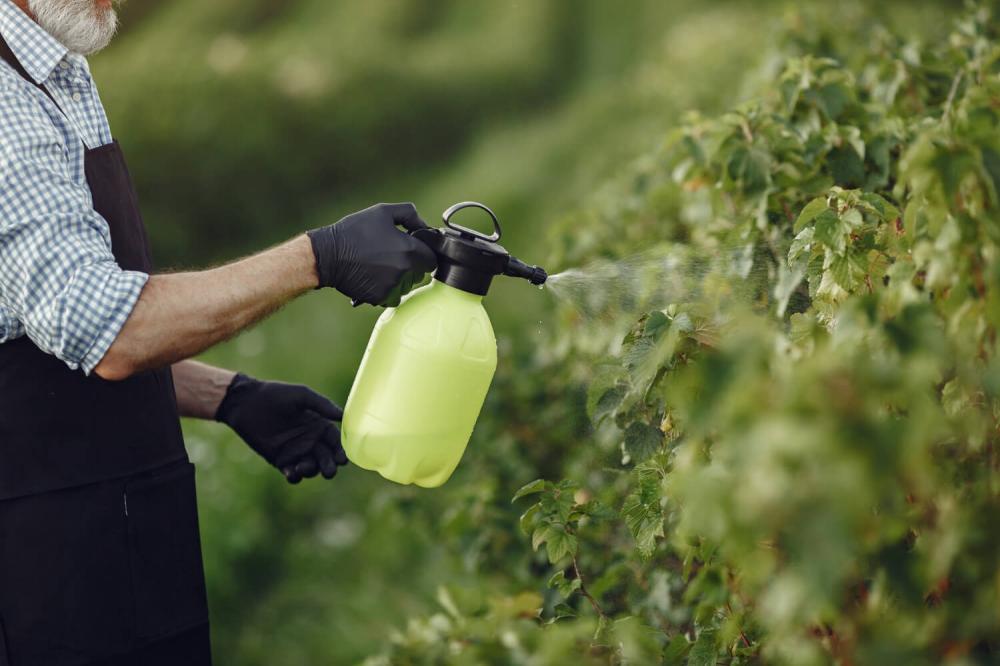

In a world filled with harmful chemicals and manufactured fertilizers, both professional and amateur farmers are returning to nature. The best liquid organic fertilizer is not just plant food; it's a complete system for revitalizing soil, strengthening plant roots, and increasing productivity in a way that is 100% safe for your health, your family's health, and the environment. In this comprehensive guide from Al-Talib Store, we'll take you on a journey to understand everything about liquid organic fertilizer: how to make it yourself, how to choose the best one, and how to use it correctly. We'll also review a treated organic fertilizer that guarantees immediate and sustainable results.
What is liquid organic fertilizer?
The best liquid organic fertilizer is an aqueous solution rich in essential nutrients (nitrogen, phosphorus, potassium, and micronutrients such as iron, zinc, and magnesium), extracted from naturally decomposed organic matter such as animal manure, plant residues, worms, seaweed, or compost extracts (solid organic fertilizer). Liquid organic fertilizer works gradually and intelligently. It not only nourishes the plant but also the microorganisms in the soil, such as beneficial bacteria and fungi, which in turn decompose the organic matter and make the nutrients readily available to the plant.
The difference between liquid and solid organic fertilizer
- Solid (compost): It has a long-term effect and improves soil structure, but its effect is slow.
- Liquid (liquid organic fertilizer): The best liquid organic fertilizer works to accelerate absorption through the roots and leaves, ideal for immediate treatment of nutrient deficiencies or during the active growing season.
If you are looking for a high-quality processed organic fertilizer, liquid fertilizer is the perfect solution for quick results.
Benefits of using liquid organic fertilizer
Here are the countless benefits of the best liquid organic fertilizer :
- Instant absorption: The nutrients in liquid fertilizer are in the form of ions ready for absorption through the roots or leaf stomata, meaning your plant benefits in just 24-48 hours.
- Completely safe: There is no risk of burning plants even if the concentration increases slightly, unlike chemical fertilizers.
- It gradually improves the soil: it stimulates the growth of beneficial microbes that break down suspended minerals and make the soil alive and porous.
- Reduces environmental stress: Helps the plant resist drought, heat, and minor insect attacks.
- Environmentally friendly: It does not pollute groundwater or cause soil salinization.
- It enhances taste and nutritional value: especially in vegetables and fruits, producing more flavorful food that is richer in vitamins.
- Economical: It can be diluted to varying degrees and sprayed over large areas at a low cost.
You may be interested in: Agricultural fertilization methods
Components to look for in a good liquid organic fertilizer
Here are the main components of organic fertilizer:
- Sources rich in nitrogen (N): protein extracts, dung, dried blood, or green algae extracts.
- Sources rich in phosphorus (P): bone meal, natural rock phosphate, or bat dung.
- Sources rich in potassium (K): seaweed extract, wood ash, or fermented natural fertilizer solution.
- Micronutrients: Iron is important for green leaves, manganese, zinc, copper, boron.
- Humic and fulvic acids: These are natural soil improvers that increase absorption efficiency.
- Free from chlorine and industrial chemicals.
How to use liquid organic fertilizer step by step
Follow these steps to ensure the best results when applying the liquid organic fertilizer method:
Dilution (appropriate concentration)
- Read the product instructions carefully. Concentrations vary.
- A general rule for concentrated liquid organic fertilizer is 1:10 to 1:50 (one part fertilizer to 10-50 parts water). It is safer to start with a weaker concentration.
- For small or newly planted plants: use a weaker concentration.
Choosing the time for spraying
- The best time is early morning (before the scorching sun rises) or evening after sunset. This allows the leaves to absorb the water without rapid evaporation.
- Never spray in direct, hot sunlight.
Soil irrigation (root immersion)
- Pour the diluted solution around the base of the plant, not directly onto the stem.
- Flooding the soil ensures that food reaches the entire root system.
- Quantity: Until you feel the soil is moist to a depth of 10-15 cm.
foliar spray
- If you notice yellow or pale leaves, foliar spraying is the fastest.
- Use a fine sprayer to cover the surface of the paper (top and bottom) but not to drip.
- Note: Do not mix liquid organic fertilizer with oils or insecticidal soap in the same spray without testing.
repetition
- For houseplants, every 2-4 weeks.
- Seasonal vegetables every one to two weeks.
- For perennial trees, once a month during the growing season.
You may be interested in: The best insecticide for agricultural spiders
Symptoms of nutrient deficiencies and how to treat them with liquid fertilizer
Plants have their own language. Learn how to read it to use the best liquid organic fertilizer in the right place and at the right time:
Nitrogen (N) deficiency
- Symptoms: Stunted growth, pale yellow lower leaves, the whole plant looks "starved" and weak, small leaves.
- Liquid fertilizer treatment: Use a fertilizer rich in protein extract or liquid manure. Apply as a foliar spray along with root irrigation. Results appear within 3-5 days.
Phosphorus (P) deficiency
- Symptoms: Reddish-purple leaves (especially on the underside), weak root growth, delayed flowering and fruiting.
- Treatment: Use a fertilizer containing bone meal or rock phosphate. Focus on root irrigation (slow-moving phosphorus).
Potassium (K) deficiency
- Symptoms: Burning of leaf edges that turn brown and yellow while the veins remain green, weak stems, small fruits.
- Treatment: Use a liquid seaweed fertilizer. Foliar spraying is the fastest method here.
Iron (Fe) deficiency
- Symptoms: Severe yellowing between the veins, while the veins remain bright green, especially the new leaves.
- Treatment: Organic iron chelate or seaweed extract. Foliar spray directly onto the affected leaves.
Magnesium (Mg) deficiency
- Symptoms: Older leaves turn yellow between the veins while the veins remain green, and may wrinkle.
- Treatment: Add one teaspoon of Epsom salt (magnesium sulfate) dissolved in one liter of water along with the organic fertilizer.
Tips for using the best liquid organic fertilizer
Here are the most important tips when using the best liquid organic fertilizer:
- Always start with a low concentration: if the product suggests 5 ml per liter, start with 2.5 ml the first time.
- One-spot test: Before spraying all your plants, try the fertilizer on a single leaf and wait 24 hours.
- Alternate between types of fertilizer: Don't rely on just one type. Alternate between citrus fertilizer, peat moss, and compost to cover all elements.
- Watering before fertilizing: Water your plants with plain water a day before applying liquid fertilizer. This prevents burning the delicate hair roots.
- Avoid spraying on flowers: When spraying foliarly, try not to spray the flowers directly as this may cause them to become deformed or prevent pollination.
- Use lukewarm water: very cold water shocks the roots. Room temperature water (20-25°C) is ideal.
- Observe the plant after 48 hours: if you notice a significant improvement, you're on the right track. If nothing changes, increase the concentration slightly.
Shop now: The best types of liquid fertilizers from Al Talib Store
Types of the best liquid organic fertilizer
Here are the main types to help you choose:
General Purpose Liquid Fertilizer
- Suitable for houseplants, vegetables, and small trees.
- NPK ratio is similar (e.g., 4-4-4).
Liquid fertilizer rich in nitrogen for leafy vegetables
- Ideal for: lettuce, spinach, cabbage, and grass.
- A high percentage of N (e.g., 5-1-1).
- It is usually made from protein extract or dung.
Liquid fertilizer rich in phosphorus for flowering and fruiting
- Ideal for: tomatoes, peppers, strawberries, and flowering ornamental plants.
- A high percentage of P (e.g., 1-5-2).
- Made from bone meal or bat dung.
Liquid marine fertilizer (Seaweed Extract)
- It is not a complete food in the strict sense, but it is rich in plant hormones and micronutrients.
- Excellent for boosting immunity and stress tolerance.
Worm-treated organic fertilizer (Vermicompost Tea)
- The finest type of liquid fertilizer. Rich in microbes and hormones.
- It is considered a highly treated organic fertilizer because it is free from any pathogens.
Application methods and best practices for the best liquid organic fertilizer
Here are the application methods and best practices for the best liquid organic fertilizer:
For home gardening (pots):
- Frequency: Every 10-14 days during spring and summer. Once a month in winter.
- Method: Dissolve 5-10 ml of fertilizer in 1 liter of water. Water the soil directly until water runs out of the pot.
For the ground-level garden:
- Frequency: Every week for fast-growing plants (vegetables), every 3-4 weeks for trees.
- Method: Use a watering can or drip irrigation system. Dissolve 1 liter of concentrated fertilizer per 100 liters of water and spread it over the entire garden area.
For foliar spraying (greenhouse):
- Concentration: Approximately 50% weaker than the root irrigation concentration.
- Best practice: Add an organic adhesive (such as drops of liquid potassium soap) to ensure the fertilizer sticks to the leaves.
Al Talib Store for the best liquid organic fertilizer
Al-Talib Store is your ideal choice. Here's why:
- We offer you organic fertilizer treated with precise aerobic fermentation techniques that ensure the product is free from harmful bacteria and unpleasant odors, while maintaining the highest concentration of nutrients and beneficial microbes.
- We have special types for each plant such as tomato fertilizer, rose fertilizer, indoor plant fertilizer, and local herb fertilizer.
- All our products come with a simplified Arabic user manual, along with a mixing scale.
- Our team answers all your questions about how to use liquid organic fertilizer, when and how to apply it.
Conclusion
Access to the best liquid organic fertilizer isn't a luxury; it's a necessity for any farmer who wants healthy plants, abundant yields, and vibrant soil for years to come. In this article, you'll learn what the best liquid organic fertilizer is, how to prepare it, and most importantly, how to use it step-by-step, avoid common mistakes, and intelligently address deficiency symptoms. Don't let your plants suffer from hunger or disease. Order yours now from Al-Talib Store.
Frequently asked questions about the best liquid organic fertilizer
Can liquid organic fertilizer be used with chemical fertilizer?
It is advisable to avoid this. Either go for fully organic or chemical compost. Mixing may kill the beneficial microbes in the organic fertilizer.
How often should I use the best liquid organic fertilizer for houseplants?
Once every two weeks during spring and summer (the growing season), and once a month or stopped completely in winter.
Does liquid organic fertilizer cause an odor in the house?
If it's high-quality, processed organic compost from a reputable store like Al-Talib, the smell will be light and earthy and will dissipate quickly. However, homemade, unfermented compost may have a strong, unpleasant odor.
Is it suitable for hydroponics?
Yes, but choose a liquid organic fertilizer specifically designed for hydroponics to ensure that the pumps do not become clogged.