
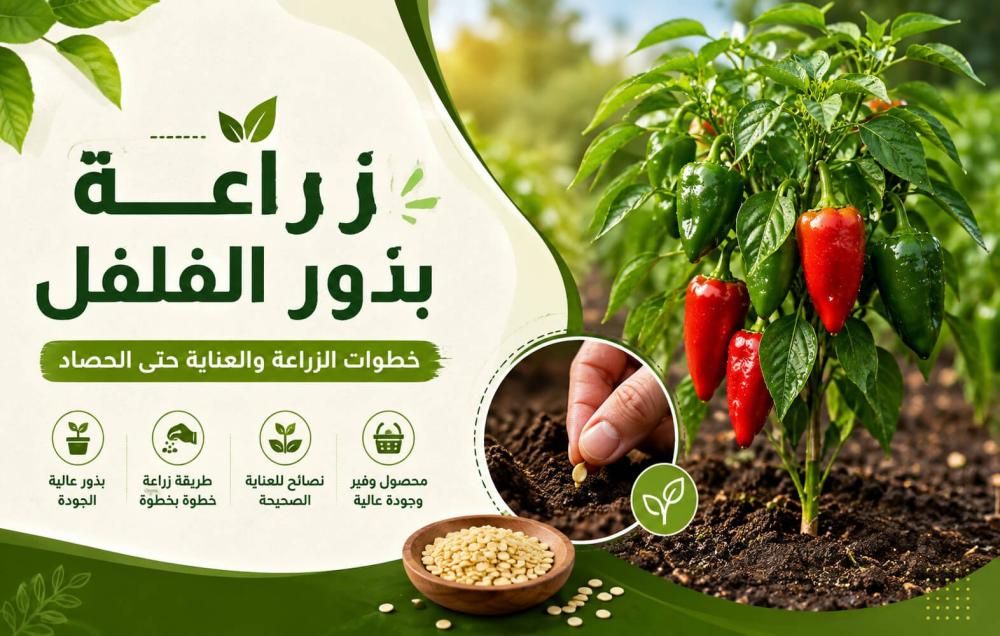
Growing peppers is one of the most enjoyable and rewarding gardening hobbies, whether you have a spacious garden or even a small balcony that allows you to grow a few pots. Peppers are distinguished by their variety of colors, shapes, and temperature tolerances, making them a wonderful addition to any green space. If you're wondering how to grow peppers from seed, how long pepper seeds take to germinate, or looking for the best way to grow pepper seeds at home, you've come to the right place. This comprehensive guide will take you step-by-step through each stage of pepper cultivation, with practical tips to help you achieve a bountiful and high-quality harvest.
Introduction to the pepper crop and its varieties
Peppers are a quintessential summer crop belonging to the nightshade family. They require relatively high temperatures throughout their growing season and are typically planted in open fields during February and March as a primary summer crop. They mature approximately 70 to 80 days after transplanting. Pepper varieties are highly diverse, catering to a wide range of tastes and uses, and can be broadly divided into two main categories:
- Sweet peppers include large-fruited varieties such as bell peppers and colors (red, yellow, and orange), which are used fresh in salads and cooking.
- Chili peppers include varieties such as chili peppers and hot peppers, which are used as spices to add a spicy flavor to dishes.
Choosing the right type depends on your specific needs and planned use, and whether you choose sweet or hot peppers, growing them from seed gives you complete control over the quality of the crop.
The best pepper seed varieties for cultivation in Saudi Arabia
The best pepper varieties for cultivation vary depending on the climate in each region of Saudi Arabia, but some varieties have proven their worth and ability to adapt to the prevailing climatic conditions:
- Local varieties: These are local varieties that are fully adapted to the Kingdom’s climate, and are characterized by their high resistance to heat stress and relative drought.
- Hybrid varieties (F1): They are characterized by high growth vigor, abundant productivity and excellent fruit quality, and are suitable for cultivation in greenhouses and open fields alike.
- Colored sweet peppers: such as varieties that produce red, yellow and orange fruits, are in high demand in the markets for their high nutritional value and beautiful appearance.
When choosing your seeds, make sure to buy them from a reliable source such as Al Talib Store to ensure seed purity and a high germination rate.
Shop now for the best agricultural seeds from Al Talib Store
Pepper planting dates in Saudi Arabia according to growing seasons
Due to the diverse climate in Saudi Arabia, which includes coastal, mountainous, and desert regions, optimal planting times vary from one region to another.
- The main summer crop: Pepper seedlings are planted in late February and early March in most regions of the Kingdom, and this is the main crop that farmers rely on.
- Autumn crop: In areas with a temperate climate, peppers can be grown in late summer to obtain an autumn crop.
- Greenhouse farming: Greenhouses allow for year-round farming, avoiding the extremely hot summer months in inland areas.
It should be noted that peppers do not tolerate frost or extreme cold, so planting them in winter should be avoided in areas where temperatures drop significantly.
Preparing pepper seeds before planting
To ensure successful pepper cultivation, you need to prepare the seeds correctly before starting the actual planting process. Here are some basic steps:
- Soak pepper seeds in warm water (around 25-30°C) for 12-24 hours before planting. This soaking helps to activate the seeds and speed up germination.
- The seeds can be soaked in a diluted solution of fungicide for 10-15 minutes, then washed thoroughly with clean water, to reduce the risk of fungal diseases that may affect the seedlings.
- After soaking and disinfecting, the seeds are dried slightly on a clean cloth or blotting paper, then they are ready for planting.
These simple steps improve the germination time of pepper seeds and increase the percentage of seeds that will germinate successfully.
How to grow peppers from seeds in a nursery
Growing peppers in a nursery and then transplanting the seedlings to their permanent location is the most common and successful method. Follow these steps to obtain strong seedlings:
- Soil preparation: Use a light, well-draining soil mix consisting of peat moss and perlite or clean sand. Ensure the soil is sterilized before planting to eliminate pathogens.
- Planting: Fill the pot or planting tray with soil and gently firm it down. Place one or two seeds in each hole (hole) at a depth of about 0.5-1 cm. Cover the seeds with a very thin layer of fine soil – do not bury them too deeply.
- Irrigation: Lightly spray the soil surface, avoiding heavy irrigation which may flood the seeds and move them from their place, to keep the soil consistently moist, while avoiding over-irrigation which may lead to seed rot.
Optimal conditions for germination
- The ideal temperature for germinating pepper seeds is between 22-28 degrees Celsius.
- Place the trays in a warm, well-lit location, avoiding strong direct sunlight during the initial germination stage.
- Covering the trays with a clear plastic lid helps to retain moisture and prevent overheating.
- The germination period for pepper seeds usually ranges between 7-21 days depending on the variety and growing conditions, and the first seedlings appear during this period.
Transplanting pepper seedlings to permanent ground
When the pepper seedlings reach a suitable size (about 10-15 cm and have 4-6 true leaves) and are 4 to 6 weeks old, they are ready to be moved to the open field or greenhouses.
Land preparation
- Plow the land well and add organic fertilizers (compost or decomposed manure) to improve soil fertility.
- Make sure the soil is well-drained, as peppers do not tolerate waterlogging.
- Prepare the planting lines at appropriate intervals.
planting distances
- In the open field: the distances between plants are about 40-50 cm, and between rows about 70-80 cm.
- In greenhouses: the distances can be reduced slightly.
Transplanting process
- Plant the seedlings in suitable holes, making sure that the planting depth is the same as it was in the nursery.
- Gently firm the soil around the seedling's roots.
- Water the seedlings immediately after planting to ensure that the roots come into contact with the soil.
Transfer timing
- It is preferable to transplant the seedlings in the early morning or evening to avoid heat stress during the day.
- Make sure to water the seedlings well a day before transplanting so that the roots are saturated with water.
You may be interested in: How to grow chili pepper seeds
Growing pepper seeds at home in a pot
Home gardening has become a favorite hobby for many, and growing peppers in pots on the balcony or rooftop is a rewarding and enjoyable method.
Choosing a pot
- Choose a pot that is at least 25-30 cm deep, because the larger the pot, the better the growth.
- Make sure there are drainage holes at the bottom of the pot to avoid water pooling which leads to root rot.
suitable soil
Use a mixture of fertile soil, sand and peat moss in equal proportions to ensure good drainage with adequate moisture retention. A quantity of fermented organic fertilizer can be added to the mixture.
Agriculture
- Place a layer of small pebbles at the bottom of the pot to improve drainage.
- Fill the pot with soil to about half its capacity.
- Plant 3 to 4 seeds in a 19 cm diameter pot, or one seed in a small pot if you will be transplanting later.
- Cover the seeds with a thin layer of soil (about half a centimeter) and sprinkle them with water.
- Place the pot in a warm, well-lit location, but avoid direct sunlight during the initial germination stage.
Home care
- Water the plants regularly, taking care not to overwater.
- Fertilize every two to three weeks using a diluted, balanced liquid fertilizer.
- In winter, plants may need protection from the cold, and in summer they should be kept away from direct sunlight at midday.
- The pot can be moved to a warmer place at night if the temperature drops.
You may be interested in: Learn the correct farming method with Al-Talib family
Stages of pepper fruit growth until harvest
Observing the development of pepper fruits from flower to ripe fruit is a pleasure in itself, and understanding these stages will help you determine the right time for harvesting:
- Flowering stage: About 60-70 days after planting the seedlings, the plants begin to flower. Pepper flowers are small, white or purple, and are either self-pollinating or require insects for pollination.
- Fruit set stage: After successful pollination, the flowers begin to turn into small green fruits.
- Growth and swelling stage: The fruits grow and swell gradually, and during this stage the weight and size of the fruits increase.
- Maturity stage: The green fruits reach full size and are ready to eat, but are still not fully ripe. If left on the plant, the fruits will ripen and turn red, yellow, or orange depending on the variety.
- Harvesting: The fruit can be harvested green or fully ripe (as desired). Fully ripe (colored) fruit has a richer flavor and higher nutritional value, but a shorter shelf life.
- Peppers mature about 70-80 days after transplanting in the open field, and the plants usually continue to produce for several months.
Al Talib Pepper Seeds Store
To ensure the success of your pepper seed-growing experience, it all starts with choosing high-quality seeds. This is where Al Taleb Store comes in – your trusted destination for everything you need to successfully begin your agricultural journey. The store offers a wide selection of premium pepper seeds from the best local and international varieties, guaranteeing seed purity and a high germination rate. Al Taleb Store also provides all the necessary agricultural supplies, including soil, fertilizers, and pesticides, making it a one-stop shop for both home and professional gardening.
Conclusion
Growing peppers from seed is a journey filled with enjoyment and learning, starting with a tiny seed and ending with a bountiful harvest that adds a special flavor to your table. By following the right steps in seed selection, soil preparation, planting, and ongoing care, you can enjoy a rich crop of fresh peppers, whether in your garden or even on your balcony.
Frequently asked questions about growing pepper seeds
How long does it take for pepper seeds to germinate?
The germination period for pepper seeds usually ranges from 7 to 21 days, depending on the variety and growing conditions such as temperature, humidity, and seed quality.
How to grow pepper seeds at home correctly?
For home cultivation, choose a pot with a suitable depth (25-30 cm), use light, well-drained soil, plant the seeds at a depth of 0.5 cm, keep the soil moist but not overwatered, provide a warm and bright location, and maintain a temperature of 22-28 degrees Celsius for germination.
How to grow pepper seeds in a nursery? What are the steps?
Prepare light, sterilized soil, plant the seeds half a centimeter deep, water with a spray, maintain the temperature and humidity, then thin the seedlings after the appearance of true leaves, and transfer them to the ground after 4-6 weeks.