
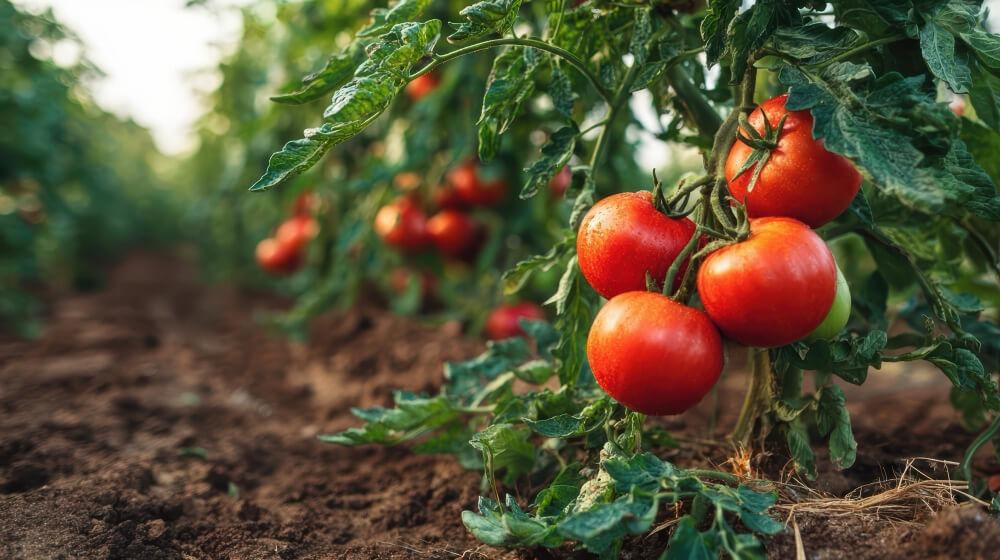
Tomatoes are among the most widely cultivated and important crops in the world, holding a special place in the hearts and kitchens of all corners of the globe. This comprehensive guide will take you on a complete journey to learn how to successfully grow tomatoes, from understanding the fundamentals of this wonderful plant to harvesting its ripe fruit. Whether you're a seasoned gardener or a hobbyist looking to start your own home garden, this article will provide you with everything you need to know about the steps involved in growing tomatoes, the best methods for transplanting seedlings, and optimal watering techniques, along with exclusive tips from Al-Talib Store to ensure the success of your gardening experience.
What are tomatoes and what is their nutritional and economic importance?
It is an annual herbaceous plant belonging to the nightshade family and is classified as a self-pollinating plant. Its origins trace back to South America, where it grew wild with small fruits resembling the cherry tomatoes we know today. With agricultural development and genetic improvement over the centuries, tomatoes have become larger and more diverse in color and shape, and their cultivation has spread throughout the world. Tomatoes are also distinguished by their rich content of nutrients essential for human health, most notably:
- Vitamin C: It boosts immunity and helps the body absorb iron.
- Lycopene: A powerful antioxidant that protects against cancer and heart disease and is considered one of the strongest natural antioxidants.
- Beta-carotene: Improves eye and skin health and promotes healthy skin.
- Dietary fiber: supports digestive health and reduces cholesterol levels.
- Essential minerals: calcium, magnesium, potassium, and iron.
Tomatoes also help reduce the risk of cancer, promote digestive health, and limit the harmful effects of ultraviolet radiation on the skin. They are also beneficial for those who follow a healthy diet.
Main varieties and types of tomatoes
Al Talib Store offers a diverse range of tomato seeds to suit various needs, uses, and climatic conditions:
- Local tomatoes: They are characterized by their traditional taste and are used in many everyday dishes.
- Cherry tomatoes: small in size and ripening quickly, such as the Golden Sun and Sugar Sun varieties.
- Organic tomatoes: They are grown without the use of chemical pesticides and are gaining increasing popularity.
- Hybrid varieties: They are characterized by their resistance to diseases and their high productivity.
Shop now for the best agricultural seeds from Al Talib Store
The ideal climate and temperature for growing tomatoes
Knowing the right time to plant is one of the most important factors for successful tomato cultivation. Tomatoes need a warm climate, and the ideal temperature for their growth is between 15 and 30 degrees Celsius. Plant growth stops when the temperature drops below 10 degrees Celsius, and fruit formation does not occur if the temperature falls below 13 degrees Celsius. Excessively high temperatures also weaken the pollination process, negatively impacting yield. Tomatoes can be grown in greenhouses or home pots year-round if suitable conditions of temperature and light are provided.
When growing tomato varieties in cooler climates or in late plantings, it is essential to protect the plants from frost. Plastic mulch or thermal blankets can be used to trap heat around the plant, especially when temperatures drop below 13°C. Dark plastic blankets can help raise the soil temperature by 5 to 10°C.
What are the criteria for choosing good tomato seeds?
Choosing the right tomato seeds is the first and most important step to ensuring a bountiful harvest of high quality. Here are the basic criteria for selecting good tomato seeds:
- Purchase high-quality tomato seeds from a certified source to ensure their purity and quality.
- Check the production and expiry dates.
- Choose varieties that are resistant to common diseases such as wilt and blight.
- Choose varieties that can withstand the temperatures in your area.
- Ensure the seeds are pure and free from impurities or weed seeds.
Al Talib Store provides high-quality tomato seeds of various types to suit different needs, whether for home or commercial farming.
The difference between planting from seeds and seedlings
Before starting the steps for growing tomatoes, it is important to understand the difference between the two available methods of cultivation:
Seed farming
- It takes longer to produce (about 3 months)
- The germination process takes 10-15 days
- It allows the selection of the strongest seedlings
- Suitable for farmers who have their own nursery
- More economical for large spaces
Tomato transplanting method
- Produces the crop faster
- Reduces the risk of germination failure
- Suitable for beginners and home gardening
- You need to buy ready-made seedlings from reliable nurseries.
How to grow tomatoes
Preparing the ideal soil for growing tomatoes
Soil preparation is fundamental to successful tomato cultivation. The soil should be:
- Lightweight and well-draining to avoid water pooling around the roots
- Rich in organic matter and containing the nutrients necessary for growth
- A neutral pH level between 6.0 and 6.8
For home gardening in pots, use a mixture of:
- Peat moss (plant peat)
- Compost (decomposed organic fertilizer)
- Coarse sand to improve drainage
For commercial farms, it is preferable to analyze the soil before planting to determine its nutrient needs.
How to grow tomatoes from seed
Here are the steps to growing tomatoes from seed:
- Fill the starter tray with sterile, well-draining soil and ensure the tray is clean to avoid disease transmission.
- Dig a hole 6 mm deep in each cell of the tray and put one seed in each hole and cover it with a light layer of soil (about 0.5 cm).
- Water the soil until it is moderately moist and keep the soil consistently moist until germination. Germination period: 10-15 days.
- About two weeks after the seedlings emerge, transfer them to small containers and continue to care for them for 6-8 weeks or until they reach 10-15 cm in length, making sure to sterilize the soil and check its pH before final transfer.
Planting tomato seedlings in the ground or pots
When the seedlings reach the appropriate height (10-15 cm) and have 4-6 true leaves, they are ready to be transplanted to their final location:
- In open ground, a distance of 50-70 cm is left between plants and a distance of 70-100 cm between rows, and the seedling is planted deep enough so that only 4-5 leaves appear above the soil surface. It is also preferable to bury part of the stem to encourage the growth of additional roots.
- For pots, use pots with a volume of at least 20 liters and make sure there are drainage holes at the bottom of the pot, and plant one seedling in each pot.
- In greenhouses, crops can be grown in special growing bags or directly in the soil, ensuring good ventilation.
Proper irrigation and fertilization of tomatoes
After learning how to grow tomatoes, here's how to irrigate them, which is a crucial factor in the success of the crop:
- Growing tomatoes outdoors may require up to 700 mm of irrigation water during the growing season.
- In greenhouses, plants need about one liter of water per day, and the amount increases on sunny and hot days.
- It is preferable to water in the early morning or late evening.
- Avoid wetting the plant's leaves to reduce the risk of fungal diseases.
- It uses 12-20 mm diameter drip pipes that provide 2-8 liters of water per hour.
Caring for tomato plants during their growth stages
The best type of fertilizer for tomatoes depends on the growth stage:
- Organic fertilizers such as compost improve soil structure and retain moisture and provide nutrients gradually, decomposed manure rich in organic matter, and fermented poultry manure which contains a high percentage of nitrogen and is suitable for vegetative growth stages.
- Balanced chemical fertilizers (NPK) such as 20-20-20 in the early stages to encourage vegetative and root growth, 10-52-10 (high phosphorus) to stimulate root growth, and 12-12-36 (high potassium) in the flowering and fruiting stage to improve fruit quality.
- Liquid and foliar fertilizers, such as those containing calcium and magnesium to prevent blossom-end rot, and bio-fertilizers to improve nutrient absorption and disease resistance.
The most important diseases and pests of tomatoes and methods of prevention
Tomato cultivation faces many challenges from diseases and pests:
- Whiteflies: They feed on plant sap and transmit viral diseases.
- Aphids (plant lice): They infest leaves and cause them to become deformed.
- Chewing insects: They attack roots and stems
- Early and late blight: fungal diseases affecting leaves and fruits
- Blossom tip rot: caused by calcium deficiency
- Viral diseases: transmitted by insects
Prevention methods:
- Use disease-resistant seeds.
- Implement a suitable crop rotation.
- Avoid overhead irrigation that wets the leaves.
- Remove infected plants immediately.
- Use organic or chemical pesticides when necessary.
Growth and harvest period
Growing tomatoes from seed to harvest takes about three months, though this varies depending on the variety and climatic conditions. Signs of ripeness include a change in color to red or orange (depending on the variety), a slight softening to the touch, and the fruit separating easily from the stem.
Al-Talib Store's tips for growing tomatoes
- Make sure the risk of frost has passed before planting the seedlings outdoors.
- In hot regions, provide light shade for plants during peak hours.
- Do not neglect pruning and removing side branches; this improves the quality of the fruit.
- Monitoring for signs of stress such as wilting or discolored leaves may indicate a lack of water or nutrients.
Common mistakes to avoid when growing tomatoes
- Overwatering leads to root rot and fungal diseases.
- Agriculture in unsuitable soil, as it needs well-drained soil rich in organic matter.
- Neglecting support can cause plants to break under the weight of the fruit.
- Excessive fertilization, especially with nitrogen, during the fruiting stage.
- Planting seedlings too early exposes them to frost and stunted growth.
Why choose Al Talib Store to buy tomato seeds?
Al Talib Store is your ideal destination for obtaining high-quality tomato seeds and seedlings in Saudi Arabia. We offer you:
- Seeds from pure, high-yielding varieties.
- Varieties to suit different needs (local, organic, hybrid, crazy).
- We offer the best prices to our valued customers.
- A team of experts provides you with consultations and advice throughout the planting season.
Conclusion
After learning how to grow tomatoes by following the correct tomato-growing steps and understanding their requirements for soil, irrigation and fertilization, and choosing the right seeds from reliable sources, you can achieve a bountiful and high-quality crop in your garden or farm by visiting Al-Talib Store now.
Frequently asked questions about how to grow tomatoes in Saudi Arabia
1. How long does it take to grow tomatoes from seed to harvest?
Growing tomatoes from seed to harvest takes about 3 months, and the duration varies depending on the variety, climatic conditions, and method of cultivation.
2. What is the ideal temperature for growing tomatoes?
The ideal temperature for tomato growth is between 15 and 30 degrees Celsius, and growth stops when the temperature drops below 10 degrees Celsius.
3. How often should tomato plants be watered?
Tomato plants need watering 2-3 times a week depending on the weather, avoiding overwatering. Early morning watering is preferable. In greenhouses, plants need about one liter of water daily.
4. When is the best time to grow tomatoes in Saudi Arabia?
Tomatoes are grown in Saudi Arabia in different seasons, including the early summer season (December-January), the regular summer season (January-February), and the autumn season (July-August).