
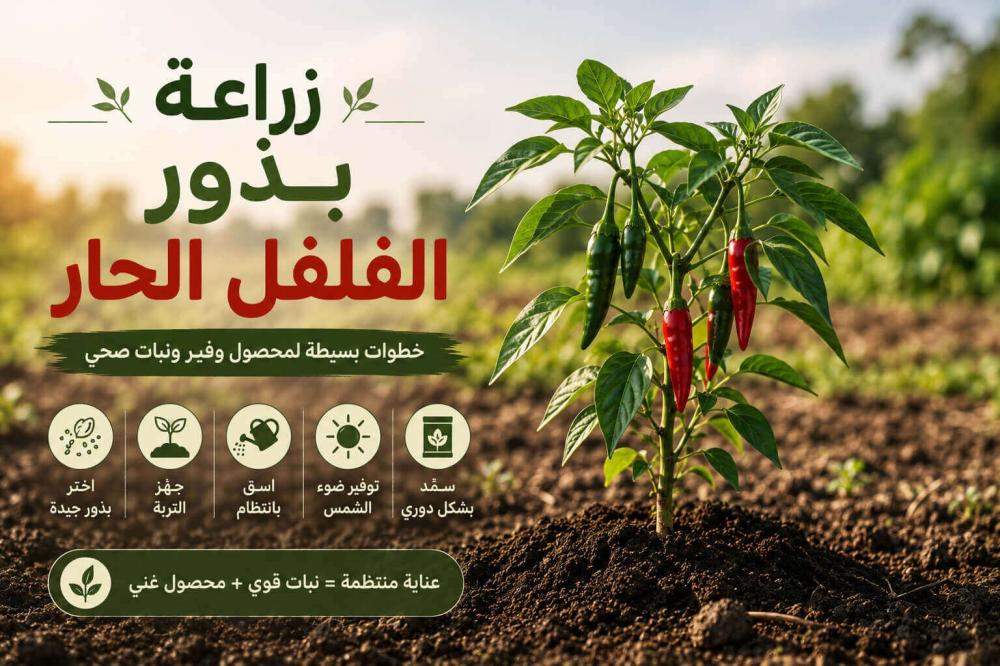
Chili peppers are among the most appealing plants for home gardeners, combining beauty and practicality. They add an aesthetic touch to balconies or gardens and provide spicy fruits that lend a distinctive flavor to various dishes. Whether you're a beginner looking for a new hobby or a seasoned gardener aiming for a bountiful harvest, growing chili peppers from seed is an enjoyable and rewarding journey. In this comprehensive article, we'll guide you step-by-step through every stage of growing chili peppers from seed, from selecting the right seeds to harvesting your spicy fruits, highlighting best practices and tips to ensure the success of your gardening experience in the Saudi Arabian climate.
Introduction to chili peppers and their importance
Chili peppers are more than just a plant; they're a vital addition to the kitchen, health, and beauty scene. Their distinctive heat and unique flavor add depth to dishes around the world, and they're used fresh, dried, or ground. They offer numerous health benefits, being rich in vitamin C and antioxidants, and helping to boost metabolism and relieve pain.
Growing chili peppers from seed at home is an ideal option, as chili peppers thrive in pots and small spaces. Watching them grow from a tiny seed to a fruitful plant provides a sense of accomplishment and satisfaction. Commercially, chili peppers are a valuable crop with consistent market demand, making them a profitable small business venture.
The best types of chili pepper seeds suitable for planting
Before embarking on your gardening journey, you should choose seeds that suit your taste and needs. Chili peppers vary greatly in shape, size, and heat. When you choose from Al-Talib Store, you will find a wide selection of high-quality varieties. Among the popular options are:
- Habanero peppers: characterized by their intense heat and fruity flavor, ideal for those seeking a spicy challenge.
- Serrano peppers: Medium heat, commonly used in Mexican cuisine.
- Shishito peppers: Low heat, usually fried as a snack.
- Cayenne pepper: very hot, famous for its use in making sauces and spices.
- F1 hybrid Indian pepper: An excellent choice for those looking for high productivity and guaranteed quality.
Shop now for the best agricultural seeds from Al Talib Store
When to plant chili pepper seeds in Saudi Arabia
Planting timing is one of the most important factors for a successful harvest. In Saudi Arabia, with its diverse climate, it's best to plant chili pepper seeds when temperatures are consistently mild. Ideally, the seeds germinate when the soil temperature is around 24°C (77°F).
Generally, early spring and autumn are the best seasons for planting peppers in most parts of the Kingdom, as daytime temperatures range between 25 and 29 degrees Celsius, which is ideal for plant growth. Avoid planting in the height of summer, as the high temperatures may prevent fruit set, or in the harsh winter cold, as this may kill the flowers and leaves.
Steps for preparing seeds before planting
To ensure rapid and strong germination of chili pepper seeds, it is advisable to prepare them before planting with simple but effective steps, especially if the seeds have a hard shell:
- Soak the seeds in lukewarm (not hot) water for 18 to 24 hours. This helps soften the seed coat and encourages germination. Adding a small amount of hydrogen peroxide to the water for 5 minutes can help eliminate any bacteria, then continue soaking in fresh water.
- To speed up growth, place the soaked seeds between damp paper towels, then put them inside a sealed, clear plastic bag. Keep the bag in a warm place. The seeds will begin to germinate within days, and when white roots appear, they are ready to be planted in soil.
You might be interested in: Discover the correct farming methods with Al-Talib Store
How to grow chili pepper seeds in trays
Sowing seeds in trays is the most common and effective method, as it allows you to control the conditions surrounding the young seedlings:
- Choose planting trays with drainage holes. Use special seedling soil or a mixture of peat moss and vermiculite to ensure good aeration and proper moisture retention.
- Fill the trays with soil and level the surface. Sow the seeds at a depth of two to three times the seed size (approximately 0.5-1 cm). Place two seeds in each cell, then cover them with a light layer of soil.
- Use a water sprayer, such as an Italian-style sprayer, to gently mist the soil, ensuring the seeds don't disturb or sink into the ground. Keep the soil moist, but avoid overwatering to prevent seed rot.
- Cover the tray with clear plastic wrap to retain moisture and heat. Place the tray in a warm spot, such as a sunny windowsill or near an indirect heat source.
Growing chili pepper seeds at home in a pot
If you don't have a garden, you can successfully grow chili peppers in a pot on your balcony or rooftop. Choose a pot that is at least 6-8 cm deep for initial growth, and preferably at least 30 cm in diameter for mature plants, with drainage holes. Follow the same steps as for planting in trays, but be sure to choose a rich, high-quality potting soil, such as potting soil, to ensure the plant receives adequate nutrition throughout its growth period.
Germination period of chili pepper seeds and the factors affecting it
Germination time is not fixed and depends on several factors. Generally, seedlings emerge within 1-3 weeks of planting. The main influencing factors are:
- Temperature is key. The ideal soil temperature for germination is around 24 degrees Celsius. Cold slows the process, and excessive heat may prevent it.
- The soil should be kept consistently moist, but not waterlogged. Dryness kills the seeds, and excessive moisture leads to rot.
- Seeds do not need light to germinate, but once seedlings emerge, adequate light (natural or artificial) must be provided to prevent them from becoming leggy and weak. It is recommended to expose seedlings to light for 12-15 hours daily after germination.
Stages of chili pepper fruit growth until harvest
The chili pepper fruit goes through distinct stages of development:
- The green stage: The fruits begin to grow in green color and are not fully ripe.
- Growth stage: The fruit continues to swell, and the outer peel becomes thicker and harder.
- Maturity stage: The fruit turns its final color (red, orange, yellow depending on the variety), and its heat and flavor reach their peak. At this stage, it is ready for harvesting.
Common mistakes when growing chili peppers and how to avoid them
- Excessive or irregular watering can lead to root rot or fruit cracking. Solution: Water regularly but moderately, allowing the soil to dry out slightly between waterings.
- Insufficient sun exposure results in weak plants and low yields. Solution: Choose a location that receives direct sunlight for as long as possible.
- Planting in poor soil deprives the plant of nutrients. Solution: Use a rich, high-quality soil such as potting soil.
- Lack of hardening: Transplanting seedlings directly outdoors shocks them and stunts their growth. Solution: Follow the hardening steps gradually.
- Neglecting pest control leads to disease outbreaks. Solution: Monitor plants regularly and treat any infestation immediately.
You might be interested in: Agricultural supplies online
Al Talib Chili Seeds Store
To ensure a strong start and a bountiful harvest, the success of your cultivation depends primarily on the quality of the seeds and supplies you use. This is where Al Taleb Store comes in – your ideal destination for everything you need to grow chili peppers. The store offers a wide variety of the finest chili pepper seeds, in addition to all the necessary growing supplies, from high-quality soil and fertilizers to pesticides, pots, and irrigation equipment. By choosing Al Taleb Store, you are choosing quality and reliability, ensuring your plants receive the best care from the very first seed.
Conclusion
Growing chili peppers from seed is a rewarding and enriching experience, starting with simple steps and culminating in a harvest of spicy and delicious fruit. By following this guide, from selecting the right seeds from Al-Talib Store to caring for the plants and harvesting, you can achieve great success in your home garden. Remember that patience and observation are key to successful cultivation, so don't hesitate to experiment with different varieties and discover what suits your taste and environment.
Frequently Asked Questions
1. What is the best time to plant chili pepper seeds in Saudi Arabia?
The best times are spring and autumn, when temperatures are moderate, ranging between 25-29 degrees Celsius during the day.
2. How often should I water my chili pepper plant?
The soil should be consistently moist but not waterlogged. Water the plant when the top layer of soil is dry; this may mean watering daily in hot weather.
3. Can chili peppers be grown in pots indoors?
Yes, it can be grown in pots indoors, provided that a sunny spot (south-facing window) and good ventilation are provided, and a deep, well-draining pot is used.